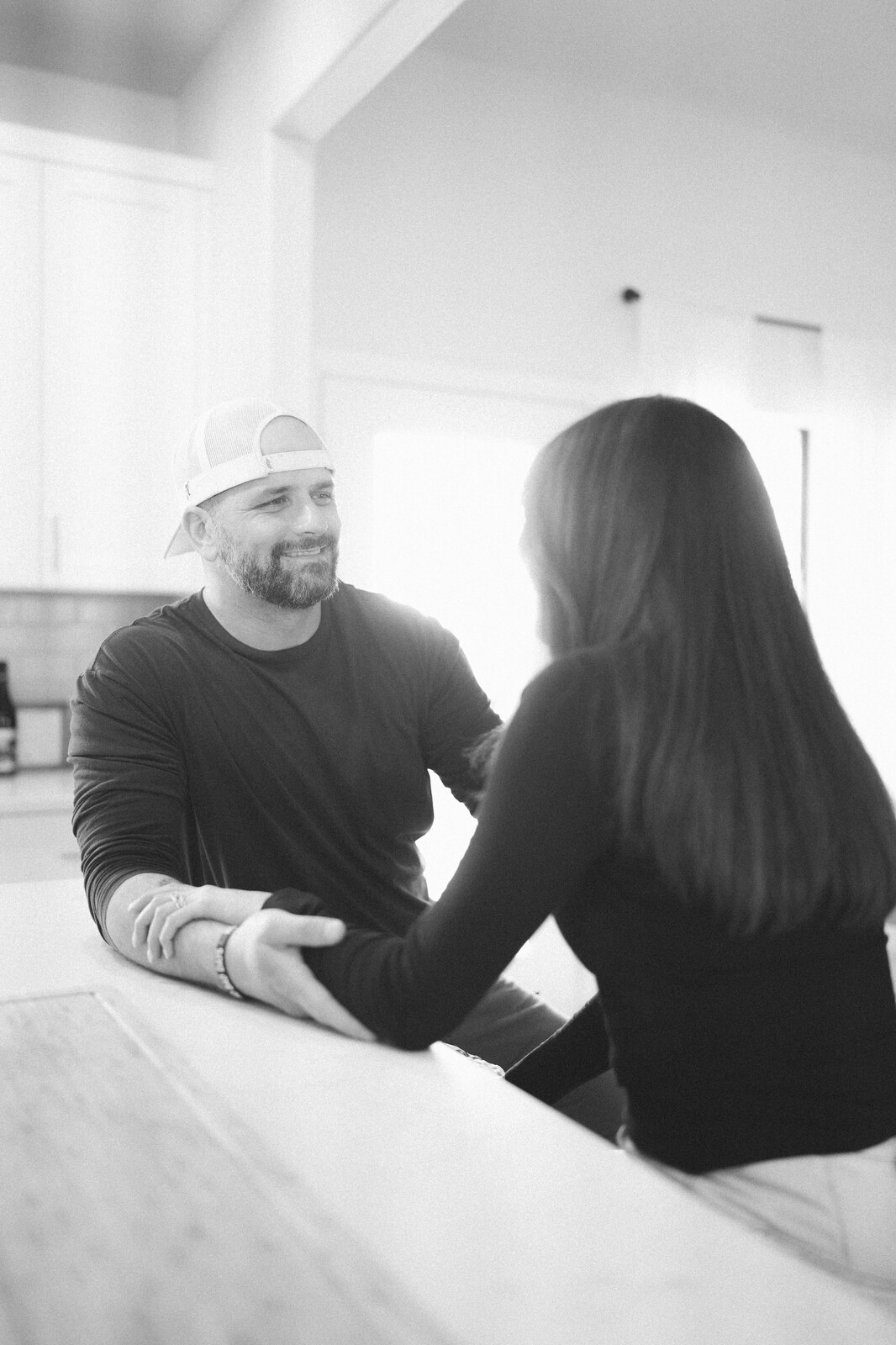
Watch the body before you watch the argument. In the first ninety seconds of any fight, both of your nervous systems make a decision about whether this conversation is safe. After that, the rest of the fight is just your mouths catching up to what your bodies already concluded.
Most husbands try to win fights with words.
They watch the argument like it is a debate. They track the points. They prepare counters. They wait for the moment they can prove she is wrong. By the time they have prepared the perfect sentence, the fight is already over. They just have not noticed yet.
The fight is over not because either of you said anything decisive. It is over because the first ninety seconds set the temperature of the entire interaction, and after that temperature is set, the body is running the rest of the conversation. Not the mind.
What happens in the first 90 seconds
0–15 seconds: trigger. Something happens. A tone, a look, a sentence. That drops one of you into a defended state. You may not even notice the drop. It is small. But the body knows.
15–45 seconds: read. Each nervous system reads the other one. Are we safe? Is this an attack? Is the room hot? Both of your bodies are running this read in parallel, faster than thought. If both reads come back "safe, hard topic, we can talk". You have a real conversation ahead. If either read comes back "this is a fight". You have a fight ahead, regardless of how reasonable the words sound.
45–90 seconds: lock. Whatever state your bodies arrived at in the read, they lock into. Now the words start matching the state. If you locked into fight, every sentence. Even the conciliatory ones. Will come out at fight temperature. The mouth is just narrating what the body decided.
Most marriages lose fights at second thirty. The husband had no idea. He thought it started at minute six.
The intervention is upstream of the words
If the body decides the fight in ninety seconds, then the only place to intervene is in those ninety seconds. Not in the third hour. Not in the apology the next day. In the first minute and a half.
The intervention is not a sentence. It is a body move.
The 90-second protocol
Second 0–10: feet flat, breath out. The moment you feel the heat. In your chest, your jaw, your hands. Put both feet flat on the floor and breathe out slowly. Longer out-breath than in-breath. Do not say a word yet. The out-breath drops your heart rate. The flat feet ground you. You are buying yourself a different starting condition.
Second 10–30: do not match her temperature. If she came in at an eight, you do not come in at a seven. You come in at a four. Lower volume. Slower cadence. Shorter sentences. You are not being submissive. You are being thermostatic. Whoever is calmer sets the room.
Second 30–60: ask one operational question. Not "why are you so upset?". That is a debate question. One operational question: "What is the part of this that is most urgent to you right now?" or "Walk me through what happened." You are doing two things. You are slowing her down. You are signaling that you are here to understand, not defend.
Second 60–90: do not solve anything yet. The temptation will be to fix it inside ninety seconds. Resist. The first ninety seconds are not for solving. They are for setting the temperature low enough that the next twenty minutes can be a conversation instead of a fight. Solve nothing. Listen. Reflect one thing back. Buy time.
What happens after
If you ran the ninety seconds clean, the fight is no longer a fight. It is now a hard conversation. Hard conversations have their own difficulty. But you can finish them. Fights you cannot. Fights end. Hard conversations resolve. The 90-second discipline is the difference between the two.
The argument is not where the work is. The argument is downstream. The work is in your body in the first minute and a half. Before the first real sentence comes out. Win the ninety seconds and you stop losing the marriage one fight at a time.